 EN
EN

Modern automotive repair facilities rely heavily on efficient lifting equipment to deliver quality service while maintaining safety standards. Among the various types of vehicle lifting equipment available, scissor car lifts have emerged as the preferred choice for many professional mechanics and automotive service centers. These innovative lifting systems offer a unique combination of stability, versatility, and operational efficiency that makes them indispensable in today's fast-paced automotive repair environment.
The automotive service industry has witnessed significant technological advancements over the past decades, and lifting equipment has evolved accordingly. Scissor car lifts represent a perfect blend of traditional mechanical engineering principles and modern safety features. Their popularity among mechanics stems from their ability to provide reliable vehicle elevation while offering superior access to undercarriage components. This combination of functionality and practicality has made them a cornerstone of professional automotive maintenance operations.
Enhanced Safety Features and Stability
Mechanical Safety Advantages
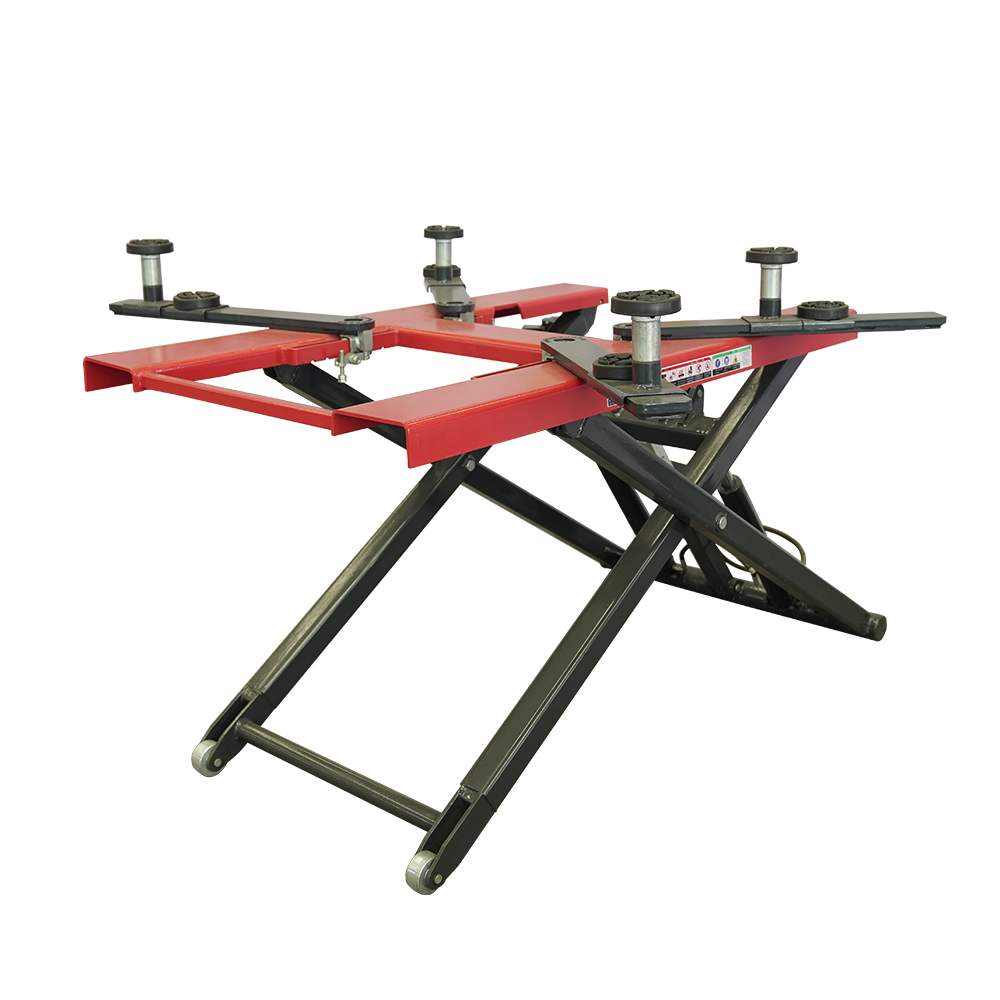
Safety remains the paramount concern in any automotive repair facility, and scissor car lifts excel in providing multiple layers of protection for both vehicles and technicians. The scissor mechanism itself creates an inherently stable platform that distributes weight evenly across the lift structure. Unlike single-post or two-post lifts, scissor car lifts feature a broader base of support that significantly reduces the risk of vehicle instability during maintenance procedures.
The mechanical advantage provided by the scissor design ensures that the lifting force is applied uniformly across the vehicle's contact points. This uniform distribution prevents stress concentration that could potentially damage vehicle frames or suspension components. Many modern scissor car lifts incorporate safety locks at multiple height positions, allowing mechanics to secure the lift at precise working heights without concern for unexpected lowering.
Operational Safety Protocols
Professional mechanics appreciate the predictable behavior of scissor car lifts during operation. The controlled lifting and lowering motion eliminates sudden movements that could destabilize the vehicle or create hazardous working conditions. Advanced scissor car lifts feature emergency stop mechanisms and pressure relief valves that prevent over-pressurization of the hydraulic system. These safety features provide mechanics with confidence when working beneath elevated vehicles.
The enclosed scissor mechanism also protects technicians from potential pinch points and moving parts that might be exposed in other lift designs. This design characteristic reduces the likelihood of workplace injuries and creates a safer working environment. Many facilities find that the enhanced safety profile of scissor car lifts leads to reduced insurance costs and improved employee satisfaction rates.
Superior Workspace Access and Efficiency
Optimal Working Height Configuration
One of the most significant advantages that mechanics cite when discussing scissor car lifts is their ability to position vehicles at ergonomically optimal working heights. Unlike pit-based systems that require mechanics to work in confined spaces, scissor lifts elevate vehicles to comfortable standing heights. This positioning reduces physical strain on technicians and allows for more efficient completion of maintenance tasks.
The platform design of scissor car lifts provides unrestricted access to the entire undercarriage of the vehicle. Mechanics can easily move around the lifted vehicle without encountering the structural obstacles present in other lift configurations. This freedom of movement translates directly into improved productivity and more thorough inspection capabilities. The ability to access all areas of the vehicle from a standing position significantly reduces the time required for comprehensive maintenance procedures.
Tool and Equipment Integration
Modern scissor car lifts often feature integrated tool storage and pneumatic connections that further enhance workplace efficiency. These built-in features eliminate the need for mechanics to repeatedly retrieve tools from distant locations, streamlining the maintenance process. Some advanced models include integrated lighting systems that illuminate the work area, ensuring optimal visibility during detailed repair procedures.
The stable platform provided by scissor car lifts also allows for the safe use of heavy diagnostic equipment and specialized tools. Mechanics can position computerized diagnostic systems, wheel alignment equipment, and other sophisticated tools directly beneath the vehicle without concerns about platform stability. This capability expands the range of services that can be efficiently performed using scissor lift technology.
Versatility Across Vehicle Types and Services
Multi-Vehicle Compatibility
The adaptability of scissor car lifts makes them suitable for servicing a wide range of vehicle types and sizes. From compact passenger cars to light commercial vehicles, these lifts can accommodate varying wheelbase lengths and ground clearance requirements. The adjustable contact points and flexible platform configurations allow mechanics to safely lift vehicles with different undercarriage designs without modification to the lift system.
Many scissor car lifts feature removable or adjustable sections that can be configured to accommodate specific vehicle requirements. This modularity ensures that a single lift can serve multiple purposes within a service facility, maximizing the return on equipment investment. The ability to handle diverse vehicle types with a single lift system simplifies training requirements and reduces the need for multiple specialized lifting devices.
Service Application Range
The versatility of scissor car lifts extends beyond basic vehicle compatibility to encompass a broad spectrum of automotive services. These lifts excel in applications ranging from routine oil changes and tire rotations to complex transmission repairs and exhaust system replacements. The stable platform and accessible positioning make them ideal for services that require extended periods beneath the vehicle.
Wheel alignment services particularly benefit from the precision positioning capabilities of scissor car lifts. The solid platform eliminates the vibrations and movements that can interfere with sensitive alignment measurements. Similarly, brake system maintenance and suspension work are enhanced by the stable, accessible working environment provided by these lifting systems. The consistent performance across various service applications makes scissor car lifts a valuable investment for full-service automotive facilities.
Cost-Effectiveness and Return on Investment
Initial Investment Considerations
While the initial cost of scissor car lifts may be higher than some alternative lifting solutions, the long-term value proposition makes them an attractive investment for professional automotive facilities. The robust construction and proven reliability of scissor lift systems translate into extended service life and reduced maintenance requirements. Many facilities find that the enhanced productivity enabled by these lifts quickly offset the initial investment through increased service capacity and improved technician efficiency.
The versatility of scissor car lifts also contributes to their cost-effectiveness by eliminating the need for multiple specialized lifting devices. A single scissor lift can often replace several pieces of equipment, reducing overall capital requirements and simplifying facility layout planning. This consolidation effect is particularly valuable in smaller service facilities where space optimization is critical to operational success.
Operational Cost Benefits
The operational efficiency provided by scissor car lifts translates directly into reduced labor costs and increased service throughput. The improved working conditions and enhanced access provided by these lifts allow technicians to complete maintenance procedures more quickly and with greater accuracy. This efficiency improvement enables facilities to service more vehicles per day while maintaining high quality standards.
Energy efficiency is another factor that contributes to the operational cost benefits of scissor car lifts. Modern hydraulic systems are designed to minimize power consumption while providing reliable lifting performance. The ability to maintain vehicles at working height without continuous power consumption further reduces operational costs compared to some alternative lifting systems.
Maintenance and Longevity Advantages
Simplified Maintenance Requirements
The mechanical simplicity of scissor car lifts contributes to their reputation for reliability and ease of maintenance. The straightforward design reduces the number of potential failure points and simplifies routine maintenance procedures. Most maintenance tasks can be performed by facility personnel without requiring specialized technicians or extensive downtime.
Regular maintenance of scissor car lifts typically involves basic hydraulic system checks, lubrication of moving parts, and periodic inspection of safety mechanisms. These routine procedures are well within the capabilities of most automotive service facilities and can be integrated into existing maintenance schedules. The predictable maintenance requirements help facilities plan and budget for ongoing operational costs.
Durability and Service Life
The robust construction typical of scissor car lifts ensures extended service life even under demanding operational conditions. The distributed load characteristics of the scissor mechanism reduce stress on individual components, contributing to overall system longevity. Many facilities report decades of reliable service from properly maintained scissor lift systems.
The availability of replacement parts and service support for scissor car lifts is generally excellent due to their widespread adoption in the automotive service industry. This parts availability ensures that facilities can maintain their lifting equipment in optimal condition throughout its service life. The standardized nature of many scissor lift components also helps control maintenance costs over the long term.
FAQ
What weight capacity should I consider when selecting scissor car lifts for my facility?
The weight capacity of scissor car lifts should be determined based on the heaviest vehicles you plan to service regularly. Most passenger car applications require lifts with capacities between 6,000 and 10,000 pounds, while facilities servicing light trucks or commercial vehicles should consider higher capacity models. It's advisable to select a lift with capacity exceeding your typical requirements to provide safety margin and accommodate future needs.
How much floor space is required for scissor car lift installation?
Floor space requirements for scissor car lifts vary depending on the specific model and vehicle types being serviced. Typical installations require approximately 12 to 16 feet in length and 8 to 10 feet in width for the lift platform itself. Additional clearance space around the lift is necessary for vehicle positioning and technician movement. Consult with manufacturers to determine exact space requirements for your specific application and facility layout.
Can scissor car lifts be installed in existing facilities without major modifications?
Many scissor car lifts are designed for surface mounting and can be installed in existing facilities with minimal structural modifications. The primary requirements typically include adequate electrical power supply, compressed air connections for pneumatic models, and sufficient ceiling height for full lift extension. Some installations may require concrete reinforcement or pit construction depending on the specific lift model and local building requirements.
What training is required for technicians to operate scissor car lifts safely?
Safe operation of scissor car lifts requires proper training on positioning procedures, safety protocols, and emergency procedures. Most manufacturers provide comprehensive training materials and certification programs for lift operators. Training should cover proper vehicle positioning, weight distribution considerations, safety lock engagement, and routine inspection procedures. Regular refresher training helps ensure continued safe operation and compliance with workplace safety requirements.
Table of Contents
- Enhanced Safety Features and Stability
- Superior Workspace Access and Efficiency
- Versatility Across Vehicle Types and Services
- Cost-Effectiveness and Return on Investment
- Maintenance and Longevity Advantages
-
FAQ
- What weight capacity should I consider when selecting scissor car lifts for my facility?
- How much floor space is required for scissor car lift installation?
- Can scissor car lifts be installed in existing facilities without major modifications?
- What training is required for technicians to operate scissor car lifts safely?