 EN
EN

The automotive service industry relies heavily on efficient equipment to maximize productivity and ensure safety during vehicle maintenance and storage operations. Car lifts have become indispensable tools in professional garages, automotive dealerships, parking facilities, and even residential applications where space optimization is crucial. Understanding the various types of car lifts available in today's market enables business owners and facility managers to make informed decisions that align with their specific operational requirements and budget constraints.
Modern automotive lifting systems have evolved significantly from their mechanical predecessors, incorporating advanced hydraulic and pneumatic technologies that enhance both safety and operational efficiency. The selection process for appropriate lifting equipment involves careful consideration of factors including weight capacity, installation requirements, available floor space, and intended usage patterns. Different lift configurations serve distinct purposes, from routine maintenance tasks to long-term vehicle storage solutions in commercial parking environments.
Professional automotive facilities typically evaluate multiple lift options before making substantial capital investments in lifting equipment. The decision-making process requires thorough analysis of operational workflows, safety protocols, and long-term maintenance considerations. Each lift type presents unique advantages and limitations that directly impact productivity, safety standards, and overall return on investment for automotive service businesses.
Two-Post Lift Systems
Advantages of Two-Post Configurations
Two-post lift systems represent one of the most popular choices in professional automotive service environments due to their excellent accessibility and space-efficient design. These systems feature two vertical columns positioned on either side of the vehicle, connected by adjustable lifting arms that support the car at designated lifting points. The open design allows technicians unrestricted access to the vehicle's undercarriage, making routine maintenance tasks such as oil changes, brake repairs, and exhaust system work significantly more efficient.
The floor space requirements for two-post lifts are relatively minimal compared to other lift configurations, making them ideal for facilities with limited bay space. Installation typically requires concrete foundations with specific depth and reinforcement specifications, but the overhead clearance requirements are generally manageable for most standard garage heights. Modern two-post systems incorporate advanced safety features including automatic arm locks, emergency lowering systems, and load monitoring capabilities that ensure safe operation even with varying vehicle weights and configurations.
Operational versatility represents another significant advantage of two-post lift systems, as they accommodate a wide range of vehicle types from compact cars to light trucks and SUVs. The adjustable arm configuration allows technicians to position lifting points precisely according to manufacturer specifications, ensuring safe and stable vehicle support during maintenance operations. Many professional service centers prefer two-post lifts for their combination of accessibility, safety features, and cost-effectiveness relative to other lift options.
Limitations and Considerations
Despite their popularity, two-post lift systems present certain operational limitations that facilities must consider during the selection process. The most significant concern involves proper lifting point identification and positioning, as incorrect arm placement can result in vehicle damage or unsafe lifting conditions. Technicians require thorough training on proper lifting procedures and must consistently verify manufacturer-recommended lifting points before operating the equipment.
Installation requirements for two-post lifts include substantial concrete work and precise column positioning, which can be challenging in existing facilities with established floor layouts. The overhead lifting mechanism requires adequate ceiling height and may interfere with overhead doors, lighting systems, or ventilation equipment in some garage configurations. Additionally, the asymmetric loading characteristics of some vehicles may require specialized adapters or repositioning procedures to achieve proper balance during lifting operations.
Maintenance considerations for two-post systems include regular inspection of cables, pulleys, hydraulic components, and safety mechanisms to ensure continued safe operation. The exposed lifting mechanism requires protection from environmental contaminants and regular lubrication to prevent premature wear. Facilities must also maintain adequate spare parts inventory and establish relationships with qualified service technicians to minimize downtime during maintenance or repair operations.
Four-Post Lift Systems
Structural Advantages and Applications
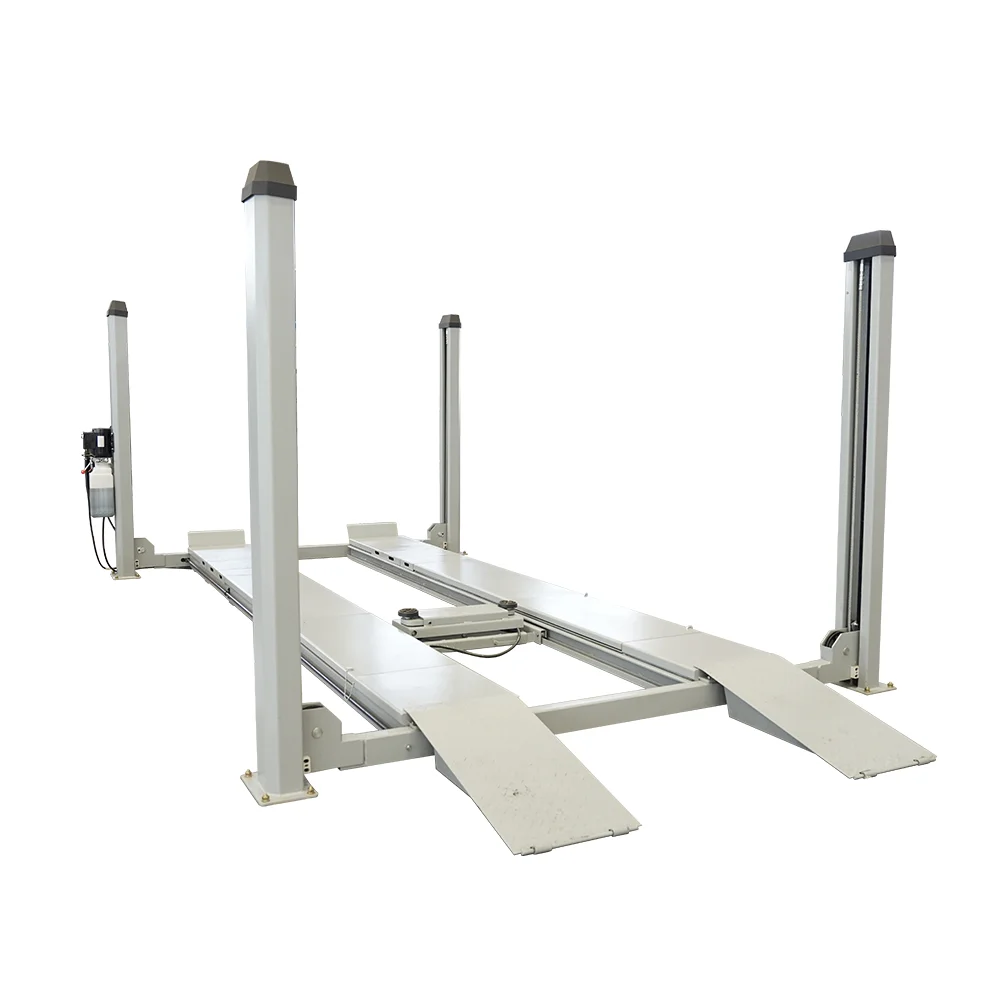
Four-post lift systems provide exceptional stability and versatility, making them particularly suitable for vehicle storage applications and heavy-duty lifting operations. These systems feature four vertical columns connected by runway platforms that support the vehicle's wheels rather than specific lifting points, eliminating concerns about proper arm positioning and reducing the risk of vehicle damage during lifting operations. The distributed weight support system makes four-post lifts ideal for long-term storage applications in parking facilities and collector car storage environments.
The drive-on design of four-post systems significantly simplifies vehicle positioning and reduces operator training requirements compared to other lift configurations. Drivers can position vehicles on the runway platforms without requiring specialized knowledge of lifting points or complex positioning procedures. This user-friendly approach makes car lifts accessible to a broader range of operators and reduces the potential for operator-related accidents or vehicle damage.
Commercial parking applications particularly benefit from four-post lift systems due to their ability to double parking capacity in existing spaces while maintaining easy vehicle access. The stable platform design allows for safe storage of vehicles for extended periods without concern about lifting point stress or vehicle settling. Many four-post systems incorporate optional accessories such as drip trays, wheel chocks, and secondary lifting mechanisms that enhance their versatility for both storage and maintenance applications.
Operational Considerations and Limitations
While four-post lifts offer excellent stability and ease of use, they require significantly more floor space than two-post alternatives, which may limit their suitability in space-constrained facilities. The runway platform configuration necessitates clear approach areas on both ends of the lift, effectively requiring nearly twice the vehicle length in available floor space. Facilities must carefully evaluate their layout requirements and traffic flow patterns before committing to four-post lift installations.
Undercarriage access represents the primary limitation of standard four-post lift systems, as the runway platforms and structural framework can obstruct access to certain vehicle components. While optional rolling bridge jacks and secondary lifting mechanisms can provide limited undercarriage access, these solutions add complexity and cost to the basic lift configuration. Maintenance operations requiring extensive undercarriage access may require alternative lift solutions or supplementary equipment to achieve optimal working conditions.
Installation requirements for four-post systems typically involve less complex concrete work compared to two-post alternatives, but the larger footprint may require significant facility modifications in retrofit applications. The horizontal force distribution characteristics require adequate floor reinforcement and proper anchoring to prevent structural movement under load. Facilities must also consider overhead clearance requirements for the lifting mechanism and ensure adequate ventilation around the lift structure to prevent moisture accumulation and corrosion.
Scissor Lift Technologies
Compact Design Benefits
Scissor lift systems offer unique advantages in applications where minimal floor space utilization and low-profile installation requirements are priorities. These systems utilize a pantograph mechanism that extends vertically from a recessed position, providing significant lifting capacity while maintaining a compact footprint when lowered. The flush-mount installation capability makes scissor lifts particularly attractive for facilities seeking to maximize available floor space and maintain unobstructed traffic flow when the lift is not in use.
The distributed load characteristics of scissor lift platforms provide excellent vehicle stability during lifting operations, similar to four-post systems but with reduced space requirements. The platform design accommodates various vehicle configurations and eliminates concerns about lifting point identification and positioning. Modern scissor lifts incorporate advanced hydraulic systems with precise load control and emergency lowering capabilities that ensure safe operation across a wide range of vehicle weights and loading conditions.
Installation flexibility represents another significant advantage of scissor lift systems, as they can be configured for both above-ground and below-ground installation depending on facility requirements and existing infrastructure. The modular design allows for customization of platform dimensions and lifting capacity to match specific application needs. Many facilities appreciate the clean, professional appearance of scissor lifts and their ability to blend seamlessly with existing floor layouts when properly installed.
Technical Limitations and Requirements
Scissor lift systems present certain technical challenges that facilities must address during planning and installation phases. Below-ground installation requires extensive excavation work and sophisticated drainage systems to prevent water accumulation and hydraulic contamination. The complexity of below-grade installations often results in higher initial costs and longer installation timelines compared to surface-mounted alternatives. Facilities must also consider access requirements for maintenance and repair operations when planning scissor lift installations.
The lifting mechanism characteristics of scissor systems may limit their suitability for certain vehicle types or loading conditions. The gradual extension motion requires adequate clearance around the vehicle during lifting operations, which may restrict their use in tightly configured service bays. Additionally, the horizontal force components generated during lifting operations require robust foundation systems and may affect vehicles with low ground clearance or fragile undercarriage components.
Maintenance requirements for scissor lift systems include regular inspection and lubrication of the pantograph mechanism, hydraulic system components, and safety devices. The complex mechanical linkages require specialized knowledge for proper adjustment and repair, potentially limiting service options to factory-trained technicians. Facilities must also maintain adequate spare parts inventory for critical components and establish preventive maintenance schedules to ensure continued safe operation and minimize unexpected downtime.
Mobile and Portable Lift Solutions
Flexibility and Versatility Advantages
Mobile lift systems provide exceptional operational flexibility for facilities requiring adaptable lifting solutions or serving multiple work locations. These systems typically feature wheeled or self-contained designs that allow repositioning within facilities or transport between different service locations. The mobility aspect makes them particularly valuable for automotive service businesses operating in multiple locations or requiring flexible bay configurations to accommodate varying workflow demands.
Portable lift technologies have advanced significantly in recent years, incorporating lightweight materials and compact hydraulic systems that maintain substantial lifting capacity while preserving mobility characteristics. Modern portable lifts can accommodate most passenger vehicles and light trucks while requiring minimal setup time and no permanent installation modifications. This flexibility allows businesses to optimize their equipment utilization and respond quickly to changing operational requirements or service demands.
The investment characteristics of mobile lift solutions often appeal to smaller automotive service businesses or facilities with limited capital budgets. The lower initial cost and elimination of installation expenses make portable lifts accessible to operations that might not justify permanent lift installations. Additionally, the ability to relocate equipment as business needs change provides long-term flexibility that fixed installations cannot match.
Capacity and Stability Constraints
Mobile lift systems typically operate with reduced lifting capacity compared to their permanent counterparts due to stability and portability requirements. The compact design and mobility features necessitate engineering compromises that may limit their suitability for heavy vehicles or demanding lifting applications. Operators must carefully verify vehicle compatibility and loading specifications before using portable lift equipment to ensure safe operation within design parameters.
Stability considerations represent the primary limitation of mobile lift systems, as they rely on adjustable feet or outriggers rather than permanent foundation systems for support. Proper setup procedures become critical for safe operation, requiring operators to verify level positioning and adequate support before lifting vehicles. The setup process may require additional time compared to permanent installations and demands consistent attention to safety protocols to prevent accidents or equipment damage.
Maintenance and storage requirements for mobile lifts include protection from environmental exposure and regular inspection of mobility mechanisms in addition to standard lifting system components. The frequent setup and breakdown cycles may accelerate wear on adjustment mechanisms and require more frequent replacement of consumable components. Facilities must also provide adequate storage space and protection for mobile equipment when not in use to preserve operational life and maintain safety standards.
Selection Criteria and Decision Factors
Operational Requirements Assessment
The selection process for automotive lifting equipment requires comprehensive evaluation of operational requirements, facility constraints, and long-term business objectives. Facilities must analyze their typical service mix, vehicle types, and workflow patterns to determine optimal lift configurations. High-volume oil change operations may prioritize quick vehicle positioning and maximum undercarriage access, while storage applications may emphasize stability and long-term reliability over rapid cycling capabilities.
Weight capacity requirements play a crucial role in lift selection, as facilities must accommodate their heaviest anticipated vehicles with adequate safety margins. Modern vehicles continue to increase in weight due to safety features, luxury amenities, and alternative powertrains, requiring forward-thinking capacity planning. Facilities should evaluate not only current vehicle requirements but also anticipated changes in their service mix and customer vehicle demographics over the equipment's expected service life.
Space utilization efficiency directly impacts the economic viability of different lift options, particularly in urban locations where real estate costs are substantial. Facilities must balance lift capacity and functionality against floor space requirements and consider how different lift configurations affect overall bay efficiency and customer throughput. The analysis should include consideration of vehicle approach angles, technician working space, and equipment storage requirements around each lift installation.
Safety and Compliance Considerations
Safety standards and regulatory compliance requirements significantly influence lift selection decisions, as different lift types may be subject to varying inspection and certification requirements. Professional facilities must ensure their chosen equipment meets or exceeds applicable safety standards and provides adequate protection for both operators and vehicles. The complexity of safety systems and operator training requirements may favor simpler lift designs in facilities with high staff turnover or limited training resources.
Insurance considerations and liability exposure may also influence lift selection, as some lift types present different risk profiles for vehicle damage or operator injury. Facilities should consult with their insurance providers to understand how different equipment choices might affect coverage requirements or premium costs. The availability of safety features such as automatic locks, emergency stops, and load monitoring systems may provide both operational benefits and insurance advantages.
Regulatory compliance extends beyond initial installation to include ongoing inspection and maintenance requirements that vary by lift type and local regulations. Facilities must consider the long-term costs and complexity of maintaining compliance with safety standards and factor these requirements into their total cost of ownership calculations. The availability of qualified inspection and maintenance services in the local area may influence the practical viability of different lift technologies.
FAQ
What factors should I consider when choosing between two-post and four-post lift systems
The choice between two-post and four-post lift systems depends primarily on your intended use and space constraints. Two-post lifts provide superior undercarriage access for maintenance work but require precise vehicle positioning and take up less floor space. Four-post lifts offer easier vehicle loading and better stability for storage applications but require more floor space and provide limited undercarriage access without additional equipment. Consider your primary use case, available space, operator skill level, and budget when making this decision.
How much weight capacity do I need for my automotive lift system
Weight capacity requirements depend on the heaviest vehicles you plan to service, with recommended safety margins of at least 25-50% above maximum vehicle weight. Most passenger cars weigh between 3,000-4,500 pounds, while SUVs and light trucks can exceed 6,000 pounds. Electric vehicles typically weigh 500-1,000 pounds more than comparable gasoline vehicles due to battery weight. Consider future vehicle trends and your service mix evolution when selecting capacity to ensure long-term adequacy.
What installation requirements should I expect for different lift types
Installation requirements vary significantly by lift type. Two-post lifts require deep concrete footings and precise column positioning, while four-post lifts need reinforced anchor points but less complex concrete work. Scissor lifts may require excavation for below-ground installation and sophisticated drainage systems. All installations require adequate electrical supply, proper ceiling height clearance, and compliance with local building codes. Consult with qualified installers early in your planning process to understand specific requirements for your chosen lift type and facility conditions.
How often do automotive lifts require maintenance and what are the typical costs
Automotive lifts typically require monthly visual inspections, quarterly lubrication service, and annual comprehensive safety inspections by qualified technicians. Maintenance costs vary by lift type and usage intensity but generally range from $500-2,000 annually including parts, labor, and inspection fees. Two-post lifts may require more frequent cable and pulley maintenance, while hydraulic systems across all lift types need regular fluid changes and seal replacement. Establishing preventive maintenance schedules and maintaining relationships with qualified service providers helps minimize unexpected repair costs and downtime.
Table of Contents
- Two-Post Lift Systems
- Four-Post Lift Systems
- Scissor Lift Technologies
- Mobile and Portable Lift Solutions
- Selection Criteria and Decision Factors
-
FAQ
- What factors should I consider when choosing between two-post and four-post lift systems
- How much weight capacity do I need for my automotive lift system
- What installation requirements should I expect for different lift types
- How often do automotive lifts require maintenance and what are the typical costs