 EN
EN

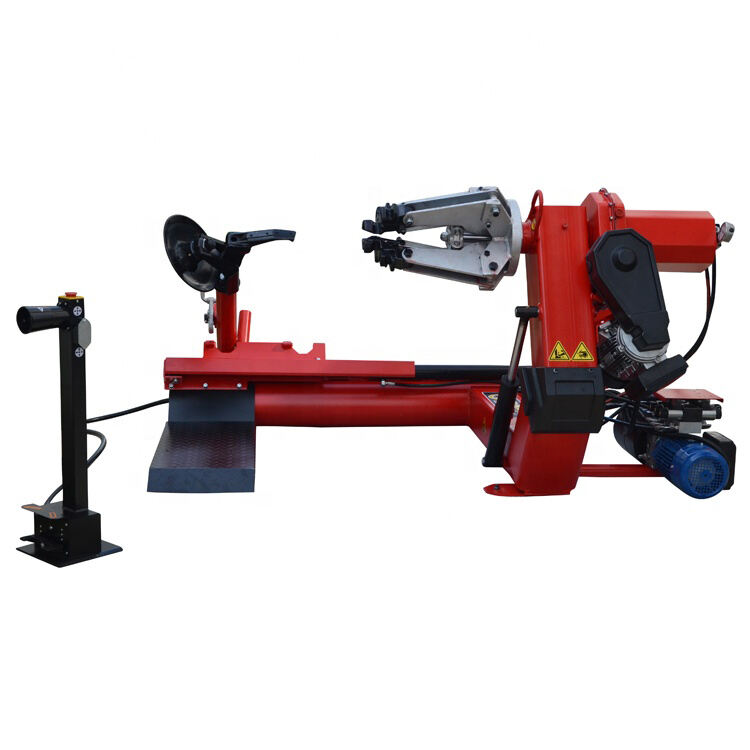
In today's automotive service industry, efficiency and reliability are paramount when selecting equipment that can withstand daily operational demands. Portable tire changers have emerged as essential tools for tire service professionals who require mobility without compromising performance quality. These versatile machines combine advanced engineering with compact design principles to deliver consistent results across various work environments. Understanding the key features that contribute to their durability and reliability helps service professionals make informed investment decisions that enhance their operational capabilities and customer satisfaction levels.
Construction Materials and Build Quality
High-Grade Steel Framework Components
The foundation of durable portable tire changers lies in their robust steel framework construction that provides structural integrity under heavy operational loads. Premium manufacturers utilize high-tensile steel alloys that resist deformation and maintain precise alignment even after thousands of tire changing cycles. These materials undergo specialized heat treatment processes that enhance their resistance to fatigue stress and extend operational lifespan significantly. The strategic placement of reinforcement ribs and cross-bracing elements distributes mechanical forces evenly throughout the frame structure.
Advanced welding techniques employed in manufacturing ensure seamless joints that eliminate potential failure points commonly found in inferior equipment designs. Professional-grade portable tire changers feature continuous seam welding rather than spot welding to maximize joint strength and prevent stress concentration areas. The frame geometry incorporates ergonomic considerations that reduce operator fatigue while maintaining optimal leverage points for efficient tire removal and installation procedures.
Corrosion-Resistant Surface Treatments
Environmental protection represents a critical factor in maintaining long-term reliability of portable tire changers operating in diverse conditions. Multi-layer coating systems begin with thorough surface preparation that removes manufacturing residues and creates optimal adhesion surfaces for subsequent protective layers. Electrostatically applied primer coatings provide excellent corrosion resistance while maintaining flexibility to accommodate thermal expansion and contraction cycles.
Top-quality portable tire changers incorporate powder coating finishes that deliver superior durability compared to traditional liquid paint systems. These thermally cured coatings create dense, non-porous surfaces that resist chemical exposure from tire mounting lubricants, hydraulic fluids, and atmospheric contaminants. Regular maintenance protocols help preserve these protective coatings and extend equipment service life substantially.
Hydraulic System Engineering
Precision-Manufactured Hydraulic Components
Reliable hydraulic systems form the operational heart of modern portable tire changers, requiring precision-engineered components that maintain consistent performance under varying load conditions. High-quality hydraulic cylinders feature chrome-plated piston rods that resist scoring and provide smooth operation throughout extended service intervals. Internal sealing systems utilize advanced elastomeric materials that maintain pressure integrity while accommodating temperature fluctuations encountered in field applications.
Hydraulic pump assemblies in superior portable tire changers incorporate variable displacement technology that automatically adjusts output pressure based on operational requirements. This intelligent pressure management reduces energy consumption while preventing excessive force application that could damage delicate wheel components. Integrated pressure relief valves provide fail-safe protection against hydraulic system overload conditions that might otherwise cause catastrophic component failure.
Advanced Filtration and Fluid Management
Contamination control represents a fundamental requirement for maintaining hydraulic system reliability in portable tire changers operating in dusty workshop environments. Multi-stage filtration systems remove particulate contaminants that accelerate component wear and compromise sealing effectiveness. High-efficiency return filters capture microscopic particles generated by normal component operation before they can circulate through sensitive hydraulic circuits.
Premium portable tire changers feature integrated fluid condition monitoring systems that alert operators to potential maintenance requirements before performance degradation occurs. Temperature compensation mechanisms adjust hydraulic fluid viscosity characteristics to maintain consistent operation across seasonal temperature variations. Regular fluid analysis protocols help identify potential issues early and prevent costly hydraulic system failures that could interrupt productive operations.
Mechanical Drive Systems
Precision Gear Train Design
Mechanical reliability in portable tire changers depends heavily on precision-manufactured gear trains that transmit rotational forces efficiently while minimizing backlash and wear characteristics. High-quality equipment incorporates case-hardened steel gears with precisely controlled tooth geometry that ensures smooth power transmission under varying load conditions. Advanced manufacturing techniques produce gear surfaces with optimal surface finish characteristics that reduce friction and extend operational lifespan.
Bearing selection plays a crucial role in maintaining mechanical system reliability throughout the operational lifetime of portable tire changers. Premium ball and roller bearings feature enhanced seal designs that exclude contaminants while retaining essential lubricants under demanding service conditions. Proper bearing preload specifications ensure optimal load distribution and prevent premature wear that could compromise equipment accuracy and reliability over time.
Lubrication System Integration
Effective lubrication management extends the operational lifespan of mechanical components in portable tire changers while maintaining consistent performance characteristics. Centralized lubrication systems distribute precisely metered lubricant quantities to critical wear points automatically, eliminating human error factors that contribute to premature component failure. High-quality synthetic lubricants maintain viscosity stability across wide temperature ranges and resist oxidation that degrades conventional petroleum-based products.
Sealed bearing assemblies in superior portable tire changers eliminate external contamination pathways while retaining factory-installed lubricants throughout their design service life. Strategic placement of lubrication points enables efficient maintenance procedures that minimize equipment downtime and ensure consistent operational availability. Regular lubrication schedules based on manufacturer specifications help maximize component longevity and maintain warranty coverage requirements.
Control System Technology
Electronic Control Integration
Modern portable tire changers incorporate sophisticated electronic control systems that enhance operational precision while providing comprehensive diagnostic capabilities for preventive maintenance programs. Programmable logic controllers manage complex operational sequences automatically, reducing operator skill requirements while ensuring consistent results across different tire and wheel combinations. Advanced sensor networks monitor critical parameters continuously and provide real-time feedback to optimize performance characteristics.
User interface designs in premium portable tire changers emphasize intuitive operation through clearly marked controls and informative display systems. Digital readouts provide precise positioning information that enables accurate tire bead placement and reduces the risk of wheel damage during mounting procedures. Integrated safety interlocks prevent operational sequences that could result in equipment damage or operator injury during normal use conditions.
Diagnostic and Monitoring Capabilities
Predictive maintenance capabilities built into advanced portable tire changers help identify potential issues before they result in operational failures or safety concerns. Continuous monitoring of hydraulic pressures, motor temperatures, and cycle counts enables data-driven maintenance scheduling that optimizes equipment availability while minimizing unexpected repair costs. Historical performance data helps identify usage patterns and component wear trends that inform replacement part inventory requirements.
Remote monitoring capabilities in connected portable tire changers enable fleet management applications where multiple units operate across different locations. Wireless communication systems transmit operational data and maintenance alerts to centralized management systems that coordinate service schedules efficiently. These technological advances help maximize return on equipment investments while ensuring consistent operational reliability across diverse applications.
Mobility and Transportation Features
Wheel and Caster Systems
Effective mobility represents a defining characteristic of portable tire changers that distinguishes them from stationary installations while maintaining operational stability during use. Heavy-duty caster assemblies feature precision ball bearings and polyurethane wheel materials that roll smoothly across various floor surfaces without marking or damage. Swivel mechanisms incorporate thrust bearings that support vertical loads while enabling effortless directional changes during positioning operations.
Locking mechanisms on quality portable tire changers provide secure positioning during operational cycles while preventing unwanted movement that could compromise safety or accuracy. Foot-operated brake systems enable quick engagement without requiring operators to bend or use hand controls that might interfere with tire changing procedures. Strategic weight distribution ensures stable operation while maintaining manageable pushing forces for equipment repositioning between work locations.
Compact Design Optimization
Space-efficient design principles enable portable tire changers to operate effectively in constrained workshop environments while providing full-sized equipment capabilities. Folding components and removable accessories reduce storage footprint requirements without compromising operational functionality or performance characteristics. Modular construction approaches facilitate transportation in standard service vehicles while enabling rapid deployment at customer locations.
Ergonomic considerations in portable tire changers minimize operator fatigue during extended use periods while maintaining access to all essential controls and adjustment mechanisms. Adjustable working heights accommodate different operator preferences and tire sizes without requiring additional equipment or complex setup procedures. These design features contribute significantly to operational efficiency and user satisfaction in professional service applications.
Quality Assurance and Testing
Manufacturing Quality Control
Rigorous quality control processes during manufacturing ensure that portable tire changers meet stringent durability and reliability standards before reaching end users. Comprehensive inspection protocols verify dimensional accuracy, material properties, and assembly integrity at multiple production stages. Statistical process control methods identify potential quality variations early and implement corrective actions that maintain consistent product quality across production batches.
Performance testing procedures simulate real-world operational conditions to validate equipment durability under accelerated wear conditions. Fatigue testing protocols subject critical components to millions of operational cycles that represent years of normal service life in compressed time periods. These validation procedures identify potential failure modes and enable design improvements that enhance long-term reliability characteristics.
Field Testing and Validation
Extensive field testing programs expose portable tire changers to diverse operational environments and usage patterns that cannot be replicated in laboratory conditions. Professional service facilities participate in beta testing programs that provide valuable feedback regarding equipment performance, reliability issues, and operator satisfaction factors. This real-world validation helps manufacturers refine design parameters and identify opportunities for continuous improvement initiatives.
Long-term reliability studies track equipment performance across multiple years of service to validate durability claims and identify maintenance requirements that optimize operational lifespan. Customer feedback systems capture operational experiences that inform future design developments and help manufacturers address emerging market requirements effectively. These comprehensive validation processes ensure that portable tire changers deliver the performance and reliability that professional users demand.
FAQ
What maintenance requirements ensure long-term reliability of portable tire changers
Regular maintenance of portable tire changers includes daily visual inspections, weekly lubrication of moving parts, monthly hydraulic fluid level checks, and annual comprehensive service procedures. Following manufacturer-specified maintenance schedules prevents premature wear and maintains warranty coverage. Key maintenance tasks include cleaning debris from moving components, checking hydraulic connections for leaks, and verifying proper operation of safety systems.
How do environmental conditions affect portable tire changer durability
Environmental factors such as temperature extremes, humidity levels, and dust exposure significantly impact portable tire changer longevity. Equipment stored in climate-controlled environments experiences less thermal stress and corrosion compared to outdoor storage conditions. Protective covers and regular cleaning help minimize environmental damage, while proper drainage prevents moisture accumulation that accelerates corrosion processes.
What safety features contribute to reliable operation of portable tire changers
Essential safety features in reliable portable tire changers include emergency stop controls, pressure relief valves, mechanical locks, and operator shields. These systems prevent equipment damage and protect operators from potential hazards during normal operation. Regular safety system testing ensures proper function and identifies potential issues before they compromise operational safety or equipment reliability.
How does proper operator training affect portable tire changer reliability
Comprehensive operator training significantly extends portable tire changer service life by ensuring proper use techniques and preventing damage from incorrect operation. Training programs cover equipment capabilities, safety procedures, routine maintenance tasks, and troubleshooting techniques. Well-trained operators recognize potential issues early and perform preventive actions that maintain equipment reliability throughout its operational lifespan.
Table of Contents
- Construction Materials and Build Quality
- Hydraulic System Engineering
- Mechanical Drive Systems
- Control System Technology
- Mobility and Transportation Features
- Quality Assurance and Testing
-
FAQ
- What maintenance requirements ensure long-term reliability of portable tire changers
- How do environmental conditions affect portable tire changer durability
- What safety features contribute to reliable operation of portable tire changers
- How does proper operator training affect portable tire changer reliability